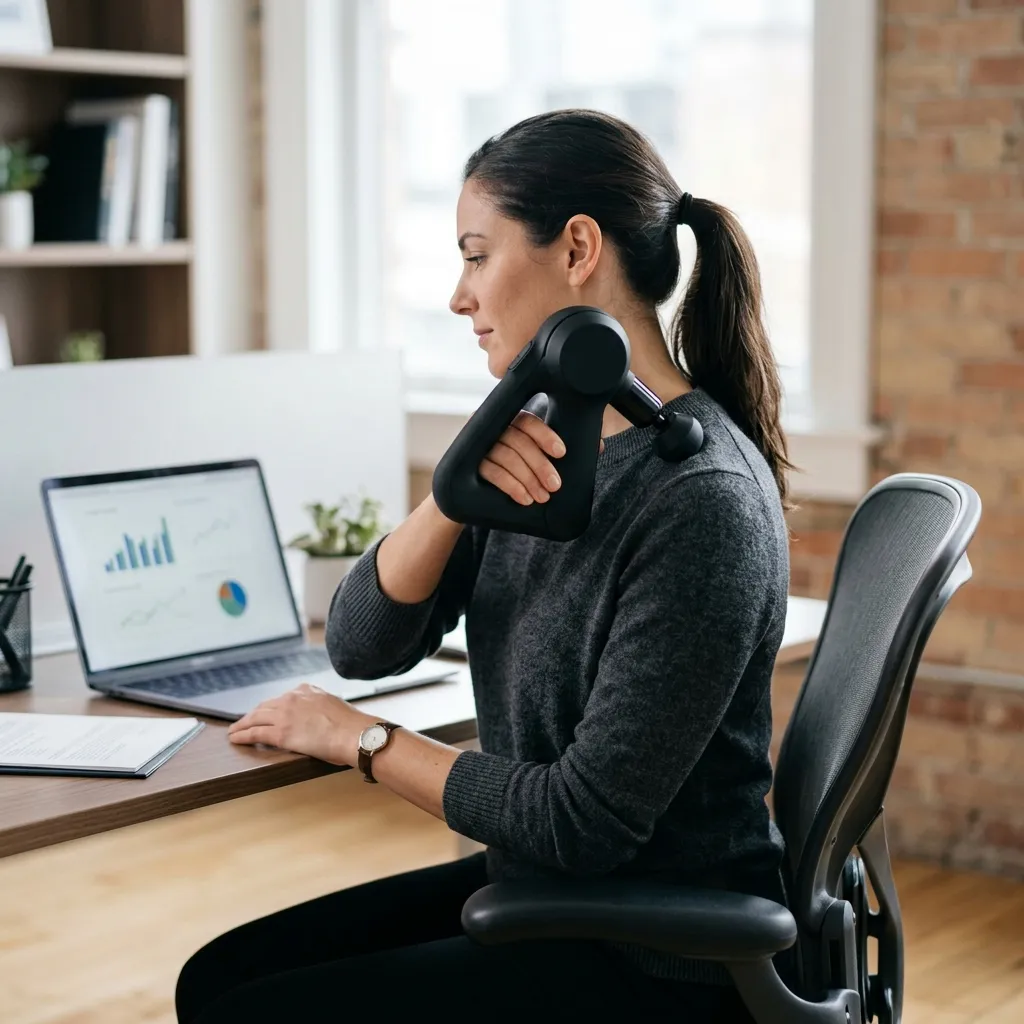
It is 3:00 PM on a typical Tuesday. You have been sitting at your desk for the last six hours, typing emails, reviewing spreadsheets, and attending back-to-back video calls. Suddenly, you feel it: a dull, aching tightness in your neck, a stubborn knot between your shoulder blades, and a general stiffness in your lower back that makes standing up straight feel like a monumental task. If this sounds familiar, you are not alone. In today’s digital-first work environment, desk fatigue and everyday body tension have become a silent epidemic affecting millions of desk workers, remote professionals, and active individuals alike.
While we often view these physical discomforts as inevitable side effects of a productive workday, they are actually our body’s way of calling for movement, recovery, and relief. The challenges of a busy lifestyle often make it difficult to schedule regular massage therapy sessions or dedicate hours to elaborate self-care routines. Fortunately, modern wellness technology has brought professional-grade recovery solutions directly to our living rooms and offices. By integrating simple, evidence-based muscle recovery tools into our daily habits, we can support our bodies, improve mobility, and combat the physical toll of a sedentary lifestyle.
In this comprehensive guide, we will explore the science of muscle tension, evaluate the best muscle recovery tools available today, and share a practical 5-minute routine you can do right at your desk or home office to find relief and restore your physical wellness.
📋 Table of Contents (Tap to expand)
Why Your Body Feels So Tight at 3 PM (And How to Fix It)
To understand why sitting at a desk causes such intense shoulder tension and neck stiffness, we have to look at the biomechanics of the human body. Humans were designed to move. When we sit in a static position for hours on end, several physiological shifts occur. First, our hip flexors remain in a shortened, contracted state. Over time, this tightness pulls on the pelvis, creating an anterior pelvic tilt that contributes directly to lower back stiffness from sitting.
Simultaneously, as fatigue sets in during the workday, our posture tends to collapse. We lean forward toward our computer screens, our shoulders round, and our head shifts forward. This posture, often referred to as “forward head posture,” dramatically increases the effective weight of the head on the cervical spine. The muscles of the neck and upper back—specifically the upper trapezius and levator scapulae—must work overtime to keep the head upright. This constant isometric contraction restricts local blood flow, leading to metabolic waste buildup and the familiar, burning tension between the shoulder blades.
Fortunately, you do not have to accept everyday body tension as a permanent condition. Positioning recovery tools as lifestyle support—rather than medical treatments—can help you break the cycle of stiffness. By combining brief movement breaks, like the benefits of walking 30 minutes every day, with targeted percussive therapy, you can actively stimulate circulation and encourage tight muscle fibers to relax, transforming your home or office into a supportive wellness environment.
The Science Behind Percussive Therapy
If you have ever seen a massage gun in action, you might wonder how these rapidly vibrating devices actually help relax tight muscles. The technology behind these recovery tools is known as percussive therapy, and it works by delivering rapid, concentrated pulses of pressure deep into the body’s muscle tissues.
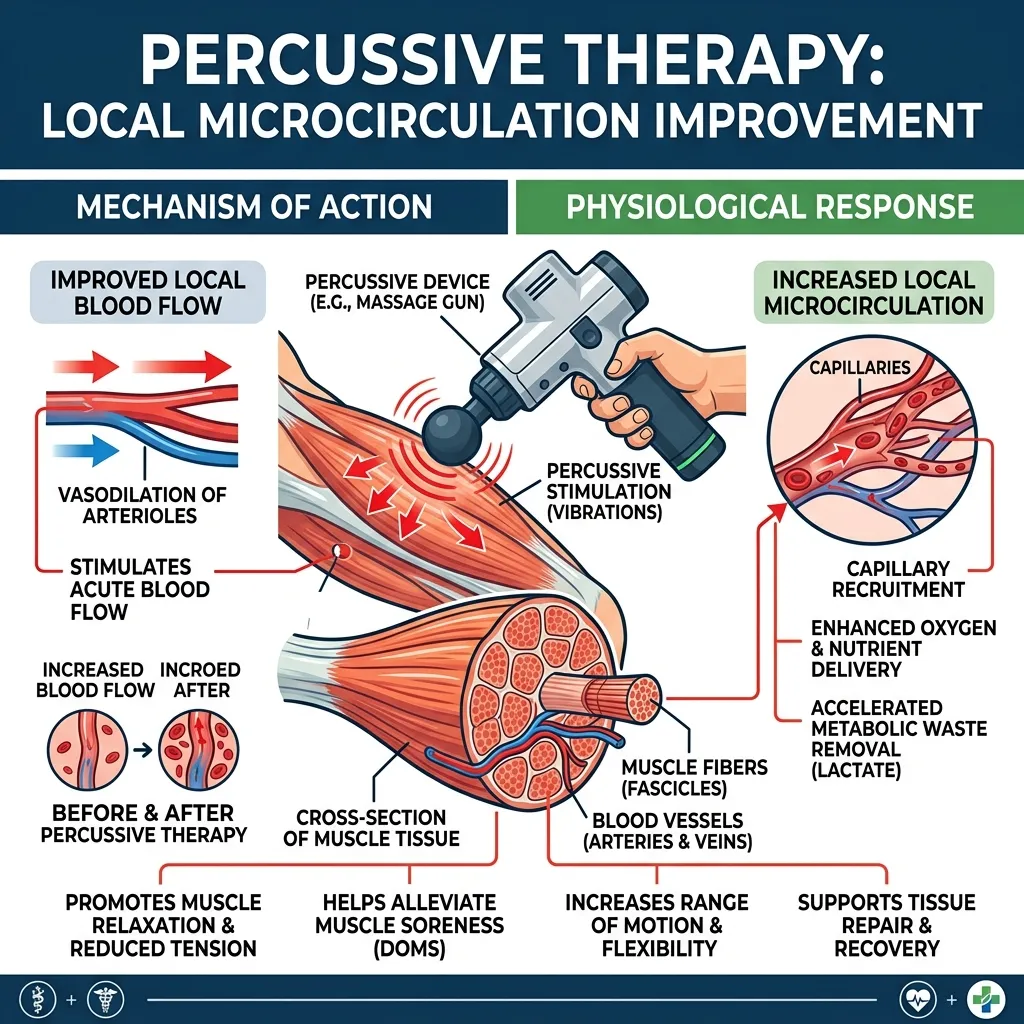
Unlike traditional static vibration, percussive therapy combines high frequency (measured in strokes per minute or RPM) with a specific amplitude or stroke length (the depth of the percussion). This rapid combination of pressure and release may help support muscle relaxation through several physiological pathways:
- Blood Circulation Explanation: The rapid mechanical pulses of percussive therapy act as a local pump, accelerating blood flow to the targeted area. This vasodilation enhances the delivery of fresh oxygen and nutrients to fatigued muscle cells while supporting the lymphatic system in clearing metabolic waste products like lactic acid.
- Muscle Relaxation Explanation: High-frequency percussions stimulate the sensory receptors within the muscles and tendons, such as the Golgi tendon organs. This sensory input triggers a neurological reflex that signals the hyperactive, tight muscle fibers to release their grip and relax. Many people use percussive therapy to target stubborn “trigger points” or myofascial knots.
- Desk Worker Benefits: For individuals facing neck stiffness or lower back discomfort, percussive therapy can provide a quick, non-invasive way to break up static muscle patterns without requiring active physical exertion. It serves as an excellent warm-up for mobility exercises, helping to restore range of motion in tight joints.
- Recovery After Activity: Beyond WFH wellness, percussive therapy supports home fitness enthusiasts. Whether you are practicing strength training for beginners or recovering from a weekend jog, these tools can support tissue elasticity and reduce the intensity of Delayed Onset Muscle Soreness (DOMS).
Best Muscle Recovery Tools for Everyday Wellness
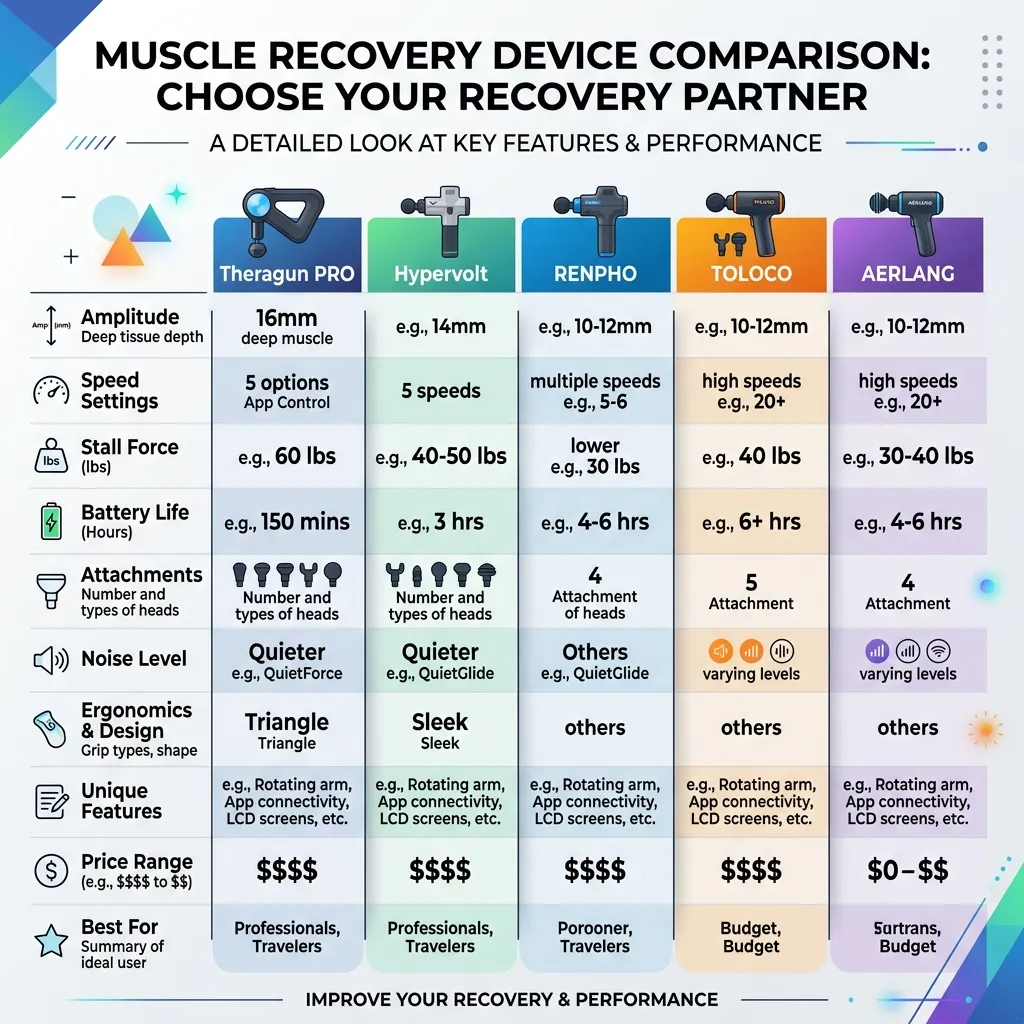
When selecting the right muscle recovery tools for your routine, it helps to understand what makes a device effective for your specific lifestyle. We evaluated products based on key parameters: ease of use, noise level, battery life, portability, comfort, and value. To help you choose the best tool for your daily setup, we have compiled a quick comparison of the top recovery tools on the market.
| Product | Best For | Main Features | Who Should Buy | Price Category |
|---|---|---|---|---|
| Theragun PRO (Gen 5) | Premium Deep Tissue | 16mm amplitude, multi-grip handle, smart app integrations | Athletes & heavy recovery users | Premium |
| Hyperice Hypervolt Go 2 | Desk Workers | Lightweight, quiet glide motor, sleek ergonomic design | Office workers & travelers | Mid-Range |
| RENPHO Massage Gun | Beginner Friendly | Compact size, USB-C charging, multiple attachments | Budget-conscious beginners | Value |
| TOLOCO Deep Tissue Gun | Affordable Home Recovery | 12mm depth, 3200 RPM, 10 massage heads, LED display | WFH professionals & families | Affordable |
| AERLANG Heated Gun | Relaxation & Warmth | Heated massage head, multiple speeds, carrying case | Tension relief & sensory comfort | Affordable |
1. Theragun PRO (Gen 5)
For those seeking a premium deep tissue option, the Theragun PRO (Gen 5) stands out as a professional-grade design. Featuring a unique triangular ergonomic grip, it allows users to reach hard-to-access areas like the lower back and shoulder blades with minimal wrist strain. The device delivers a powerful 16mm amplitude that penetrates deep into the muscle belly to address stubborn tightness. It comes equipped with multiple high-quality attachments suited for different muscle sensitivities, and its quiet force technology ensures it runs quieter than previous generations. While it represents a significant investment, its durability and advanced features make it the gold standard for dedicated muscle relaxation tools.
2. Hyperice Hypervolt Go 2
If you need an office-friendly device, the Hyperice Hypervolt Go 2 is arguably the best massage gun for desk workers. Weighing only 1.5 pounds, this lightweight and portable device fits easily into a desk drawer or laptop bag. It utilizes patented QuietGlide technology, ensuring you can use it during a virtual meeting or in a shared WFH space without causing a distraction. Its sleek, minimalist design is simple to operate, and the battery life provides up to 3 hours of operation on a single charge. It is an excellent wellness tool for quick, midday tension release sessions.
3. RENPHO Massage Gun
For those looking for an affordable, beginner-friendly entry point, the RENPHO Massage Gun is an excellent value option. Despite its compact footprint, it delivers impressive percussive power with multiple speed levels and standard attachments. It features modern USB-C charging, allowing you to charge it directly from your computer or phone charger. The beginner-friendly interface and comfortable grip make it one of the most accessible recovery tools at home for those new to percussive therapy.
4. TOLOCO Deep Tissue Massage Gun
The TOLOCO Deep Tissue Massage Gun is a highly popular affordable home recovery tool that combines versatile features with exceptional value. It offers a 12mm penetration depth and speeds up to 3200 RPM, allowing you to customize your session from a light muscle massage to a deeper tissue release. Equipped with 10 specialized massage heads (including round, fork, and flat options) and a quiet motor, this device makes it easy to target different muscle groups. It also features a long-lasting battery and a clear LED display to monitor speed settings and battery life.
Please choose display type!5. AERLANG Heated Massage Gun
If you prefer a sensory, relaxation-focused option, the AERLANG Heated Massage Gun is a unique recovery tool at home. It features a specialized heated massage head that combines percussive therapy with soothing warmth, helping to relax tight muscle fibers and stimulate circulation more quickly. The device offers multiple speed levels, a clear LCD display, and a full set of standard attachments, all packaged in a convenient carrying case. It is ideal for warming up stiff muscles after long periods of sitting or winding down before sleep.
Please choose display type!The 5-Minute Recovery Routine You Can Do at Home
Having a muscle recovery tool is only half the battle; knowing how to use it safely and effectively is what yields results. This simple, 5-minute routine is designed to help WFH professionals and active individuals ease everyday muscle tension in key areas like the neck, shoulders, and lower back.
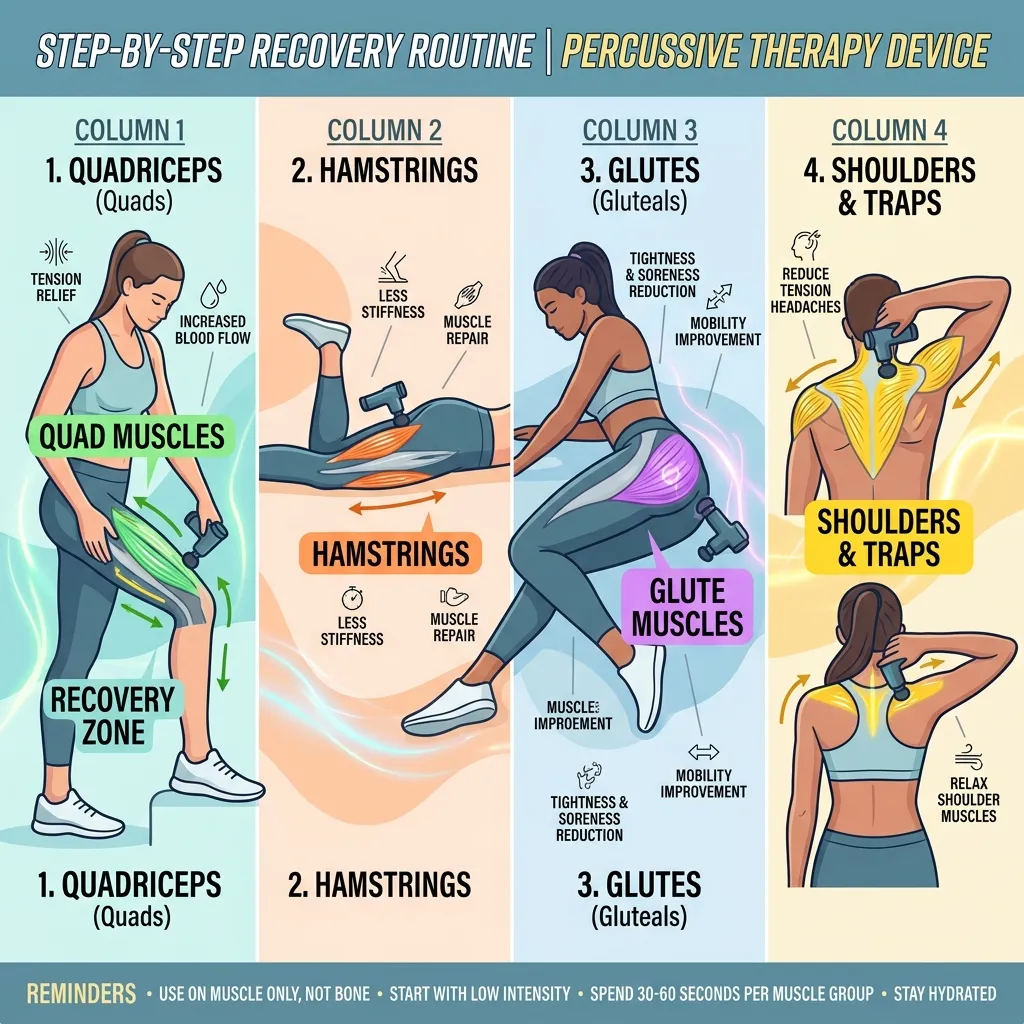
Before you begin, remember to prioritize safety. Move the device slowly across the muscle belly and avoid excessive downward pressure. The mechanical pulses should do the work; you only need to guide the tool gently over the skin.
- Start with Low Intensity (1 Minute): Always turn the device on before making contact with your body. Start on the lowest speed setting to allow your nervous system and sensory receptors to adapt. Gently place the head on your thigh or forearm to get a feel for the rhythm.
- Target Large Muscle Groups (2 Minutes): Focus on the large muscles that support your posture. Spend 1 minute on each thigh (quadriceps and hamstrings) or glute. These muscles often become tight and inactive from sitting, which contributes to lower back stiffness relief. Keep the tool moving slowly at a pace of about one inch per second.
- Address Desk Tension Areas (2 Minutes): Guide the tool across the upper back and shoulders. Target the fleshy muscle of the upper trapezius (the area between your neck and shoulder joint). Avoid direct pressure on the sides of the neck, where major blood vessels and nerves reside.
Safety Guidance: To ensure a safe session, avoid bony areas (such as the spine, collarbones, elbows, and kneecaps). Do not use the tool on joints, open wounds, acute injuries, or areas with numbness or bruising. Disclaimer: People with chronic pain, injuries, circulatory conditions, or underlying medical issues should consult a healthcare professional before using percussive therapy tools. Proper recovery should always be paired with healthy habits, including sleep improvement and practical stress management, to support long-term wellness.
Our Editorial Standards and Evaluation Process
At HealthWellness4US, our editorial team is committed to providing evidence-based, transparent, and practical wellness guidance you can trust. Our product evaluation approach is designed to cut through marketing hype and focus on features that impact your safety, comfort, and physical health. We do not accept direct compensation for positive reviews; our recommendations are based on research, technical specifications, and user experiences.
Affiliate Disclosure: HealthWellness4US may earn commissions from qualifying purchases made through links on this page. This does not affect our editorial independence or the integrity of our recommendations. We only suggest tools and products that we believe offer real value to our readers’ wellness routines.
Frequently Asked Questions About Muscle Recovery Tools
To help you optimize your home recovery routine, our editorial team has compiled answers to the most common questions about percussive therapy and recovery devices.
Are massage guns good for desk-related muscle tension?
Yes, massage guns can be highly effective tools for managing desk-related muscle tension when used correctly. Prolonged sitting often causes the muscles of the neck, shoulders, and upper back to remain in a constant state of mild contraction, which restricts local blood flow and leads to stiffness. Percussive therapy helps by delivering rapid pulses of pressure that stimulate circulation, encourage tight muscle fibers to relax, and interrupt the pain-tension cycle. For WFH wellness, a lightweight, quiet tool like the Hypervolt Go 2 can be used during short breaks to target the upper trapezius and shoulder muscles, helping to prevent the buildup of severe afternoon stiffness.
Can massage guns help with lower back stiffness?
Massage guns can support lower back stiffness relief, but they require careful application. You must never use a massage gun directly on the spine, vertebrae, or bony parts of the lower back, as this can cause discomfort or injury. Instead, focus percussive therapy on the surrounding muscle groups that contribute to lower back tension, such as the glutes, hamstrings, and hip flexors. Tightness in these large lower body muscles often pulls on the pelvis, creating tension in the lower back. By gently massaging these surrounding areas on a low speed setting, you can support overall pelvic mobility and relieve lower back tightness safely.
How often should you use a massage gun?
For general wellness and desk tension relief, using a massage gun for 2 to 3 minutes per muscle group, 1 to 2 times a day, is typically sufficient. It is important to avoid overusing these tools; applying percussion to a single muscle group for longer than 5 minutes can cause skin irritation, bruising, or muscle soreness. A quick 90-second session on your shoulders during a afternoon break is an excellent way to refresh your posture, while a longer session in the evening can support relaxation. Always listen to your body and start with short sessions on a low speed setting to assess your comfort level.
Are massage guns safe?
Massage guns are generally safe for healthy adults when used according to the manufacturer’s guidelines, but there are important exceptions. You should avoid using them on the neck’s front or sides, near major arteries, on joints, or directly on bones like the spine. Percussive therapy is contraindicated for individuals with deep vein thrombosis (DVT), varicose veins, severe osteoporosis, peripheral neuropathy, or active skin infections. If you are pregnant, have pacemaker implants, or suffer from a chronic inflammatory condition, always consult your physician or healthcare provider before incorporating a percussive recovery tool into your routine.
Can massage guns replace stretching?
No, massage guns are not a replacement for traditional static and dynamic stretching. Percussive therapy and stretching work through different physiological mechanisms and are best used together. Percussive therapy acts as a localized, mechanical myofascial release, raising tissue temperature and increasing blood flow to specific areas. Stretching, on the other hand, helps lengthen muscle fibers and supports joint flexibility through a full range of motion. For the best WFH wellness routine, use a massage gun first to relax tight, stubborn knots, and then follow up with gentle stretching or mobility exercises to maintain and expand your range of motion.
📚 Related Recovery & Muscle Health Guides:
- Best Massage Guns on Amazon Guide – Specs comparison of top recovery devices.
- Strength Training for Beginners – Proper exercise form to prevent muscle knots.
- Sleep Improvement Master Guide – Restorative night sleep for cellular tissue repair.
🩺 Medical Disclaimer
The wellness information, guides, and suggestions provided in this article are for educational and motivational purposes only. This content is not a substitute for professional medical advice, diagnosis, treatment, or therapy. Always consult with a qualified healthcare professional or physician before starting any new diet, fitness program, or wellness plan.