Maintaining physical independence and feeling secure in your own home is one of the most important aspects of active aging. Yet, according to data from the Centers for Disease Control and Prevention (CDC) STEADI framework, more than one in four older Americans experiences a fall each year. The good news is that falling is not an inevitable part of growing older. By identifying common household hazards, practicing gentle balance exercises, and understanding key safety protocols, you can significantly reduce your risk and live with confidence.
💡 Illustrative Everyday Scenarios
- Scenario A (Living Independently in a Multi-Story Home): An older adult notices unsteadiness on basement stairs. Adding motion-sensor lighting and dual handrails restores safety and confidence.
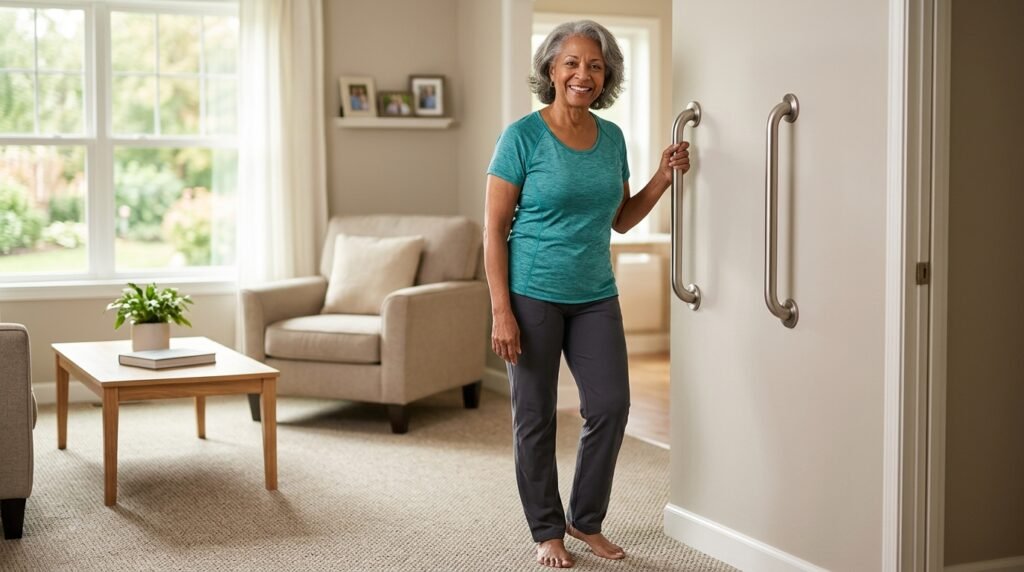
- Scenario B (Family Assisting Aging Parents): Adult children help an aging parent after a near-slip on wet bathroom tile. Installing wall-anchored grab bars transforms the morning routine.
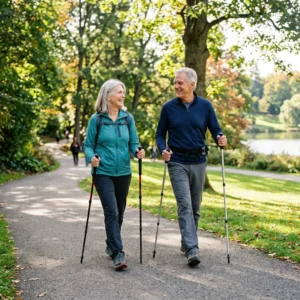
- Scenario C (Rebuilding Confidence After an Unsteady Moment): An active senior experiences a minor slip. Simple room cleanup and daily chair-assisted balance drills help them return to daily neighborhood walks safely.
📋 Table of Contents
(Tap to expand)
Understanding Why Falls Happen as We Age
Falls are rarely caused by a single factor. Clinical consensus from the National Institute on Aging (NIA / NIH) and the American Geriatrics Society (AGS) highlights that fall risk typically increases due to a combination of physiological and environmental factors:
- Age-Related Muscle Loss (Sarcopenia): Gradual decline in leg and core muscle strength affects balance recovery when stumbling.
- Reduced Proprioception & Joint Position Sense: Sensory nerve feedback from feet and ankles slows down, making unpaved ground or low lighting more challenging.
- Medication Interactions: Certain blood pressure, sedative, or anti-anxiety medications can cause sudden postural hypotension (lightheadedness upon standing).
- Environmental Obstacles: Poor home lighting, loose throw rugs, and clutter in walkways create unexpected tripping hazards.
⚠️ Safety First: When to Exercise Caution & Consult a Doctor
Always perform balance exercises near a sturdy, wall-anchored chair or kitchen counter. If you experience dizziness, chest tightness, sharp joint pain, or feel unsteady, stop immediately and sit down. Consult your primary care physician or a physical therapist if you have experienced unexplained dizziness or a fall within the past 6 months.
Room-by-Room Home Safety Checklist for Seniors
Creating a safe home environment is the fastest, most effective way to eliminate immediate fall risks. Use this room-by-room inspection guide to audit your living spaces:
📋 Printable Senior Fall Prevention Checklist
Review these room-by-room safety items with family members or caregivers:
Bathroom Safety:
- ☐ Professional wall-anchored grab bars installed in shower & beside toilet
- ☐ Non-slip rubber suction mats inside tubs & shower stalls
- ☐ Height-adjustable shower bench & handheld shower wand available
Bedroom Safety:
- ☐ Motion-sensor nightlights along the path to the bathroom
- ☐ Floor space clear of electric cords, throw rugs, & bed edge clutter
- ☐ Bed height allows feet to rest flat on floor when seated on mattress edge
Kitchen & Living Areas:
- ☐ Frequently used dishes & food items stored between waist and chest height
- ☐ Immediate cleanup of liquid or grease spills on vinyl/tile floors
Stairs & Outdoor Walkways:
- ☐ Sturdy dual handrails extending the full length of all staircases
- ☐ Closed-back shoes with non-skid rubber soles worn indoors & outdoors
- ☐ Porch steps clear of wet leaves, ice, or garden hoses
4 Beginner-Friendly Balance Exercises for Seniors
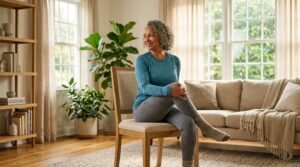
Regular balance and strength training helps maintain joint mobility and muscle reaction times. Perform these 4 gentle exercises 3 days per week using a sturdy chair for support.
1. Chair-Supported Single-Leg Stand
How to Do It: Stand tall behind a sturdy chair, holding the backrest with both hands. Slowly lift your right foot 2 inches off the floor, balancing on your left leg for 5 to 10 seconds. Lower your foot and repeat on the left side. Complete 5 repetitions per leg.
Benefits: Strengthens ankle stabilizer muscles and hip abduction stability.
❌ Common Mistake: Leaning your torso heavily to one side. Keep your chest high and shoulders level.
💡 Safety Modification: Keep both hands firmly on the chair. As your balance improves, touch the chair with just fingertips.
2. Heel-to-Toe Tandem Balance Stance
How to Do It: Stand alongside a kitchen counter or wall for support. Place your right foot directly in front of your left foot so your right heel touches your left toes. Hold this position for 10 seconds while breathing smoothly. Switch feet and repeat.
Benefits: Sharpens narrow-base balance control used when navigating tight spaces.
❌ Common Mistake: Looking down at your feet. Keep your eyes focused straight ahead on a wall target.
💡 Safety Modification: Place feet slightly wider apart (staggered stance) if tandem position feels too narrow initially.
3. Supported Side Leg Raises
How to Do It: Stand behind a chair holding the top rail. Slowly lift your right leg out to the side 6 to 8 inches, keeping your knee straight and toes pointing forward. Pause for 1 second, then lower slowly. Complete 8 to 10 repetitions, then switch legs.
Benefits: Targets the gluteus medius muscle, which prevents lateral hip swaying while walking.
❌ Common Mistake: Turning toes outward into a kick. Keep toes facing forward throughout the movement.
💡 Safety Modification: Perform smaller range of motion lifts (3 to 4 inches) if hip weakness is present.
4. Assisted Sit-to-Stand Practice
How to Do It: Sit on the front half of a firm dining chair with feet hip-width apart. Lean slightly forward from your hips, press firmly through your heels, and stand up smoothly using your leg strength (touching armrests for guidance if needed). Pause standing, then slowly lower back into the seat. Perform 6 to 8 control repetitions.
Benefits: Builds functional quadricep and glute strength needed for getting out of chairs and cars.
❌ Common Mistake: Plopping back down into the chair. Lower down slowly under muscular control.
💡 Safety Modification: Place a firm cushion on the chair seat to elevate starting height and reduce knee strain.
Frequently Asked Questions About Senior Fall Prevention
How can seniors prevent falls at home?
Seniors can prevent home falls by securing wall-anchored grab bars in bathrooms, removing loose throw rugs, installing motion-sensor nightlights along dark hallways, keeping frequently used kitchen items at waist height, and wearing supportive shoes with non-skid rubber soles.
What are the best balance exercises for older adults?
The best balance exercises for older adults include chair-supported single-leg stands, heel-to-toe tandem stances, supported side leg raises, and assisted sit-to-stand movements. These build ankle stability, hip strength, and joint confidence safely.
How can family members make a home safer for aging parents?
Family members can assist by conducting a room-by-room home safety audit, eliminating clutter and electric cords from walking paths, adding dual handrails to staircases, ensuring bright stair lighting, and scheduling annual vision and medication reviews.
What should seniors do immediately after a fall occurs?
If a fall occurs, remain calm and stay still for a few moments to check for pain or injury. If uninjured, slowly roll onto your side, push up onto hands and knees, crawl to a sturdy chair, place hands on the seat, and pivot carefully into the chair. If injured, call for emergency medical help immediately.
📚 Related Healthy Aging & Active Mobility Reading:
- Healthy Aging: Tips for Maintaining Mobility and Brain Health – Comprehensive pillars of active longevity.
- Mobility Exercises to Stay Flexible as You Age – Gentle daily joint stretches.
- Strength Training for Beginners – Build foundational muscle to support joint stability.
- 10 Science-Backed Benefits of Walking 30 Minutes Every Day – Low-impact aerobic health for seniors.
🩺 Medical Disclaimer
The wellness information, guides, and suggestions provided in this article are for educational and motivational purposes only. This content is not a substitute for professional medical advice, diagnosis, treatment, or therapy. Always consult with a qualified healthcare professional or physician before starting any new diet, fitness program, or wellness plan.
Scientific References & Authoritative Sources
- Centers for Disease Control and Prevention (CDC): STEADI Algorithm for Fall Risk Screening, Assessment, and Intervention among Community-Dwelling Older Adults. Available at: cdc.gov/steadi
- National Institute on Aging (NIA / NIH): Environmental Safety and Fall Prevention Guidelines for Older Adults. Available at: nia.nih.gov/health/fall-prevention
- American Geriatrics Society (AGS) / British Geriatrics Society: Clinical Practice Guideline for Prevention of Falls in Older Persons. Journal of the American Geriatrics Society.
For home safety and active longevity, consult our pillars of healthy aging.