
Last Updated: August 9, 2026 | Reviewed by: HealthWellness4Us Editorial Team
📁 Category: Women’s Health Authority Hub
HealthWellness4Us creates evidence-informed wellness content focused on healthy aging, nutrition, fitness, and women’s health. Our articles prioritize accuracy, clarity, and responsible health education.
Deep inside your pelvis lies a remarkable bowl of muscle and connective tissue that works quietly every second of the day. Your pelvic floor muscles hold up your internal organs, assist in maintaining spinal stability, and control the release of urine and gas. Yet, despite playing such a foundational role in everyday comfort, pelvic floor health is rarely taught or discussed until a problem arises—such as an unexpected leak while laughing, pelvic heaviness, or lower back stiffness.
Whether you are navigating your 40s, 50s, 60s, or beyond, building pelvic floor awareness is one of the most effective investments you can make in your long-term vitality. Building on the core concepts covered in our foundational guides on Women’s Health After 40 and Bladder Health After 40, this practical guide breaks down pelvic anatomy, step-by-step exercise techniques, form corrections, and daily core habits to support your pelvic strength with confidence.
📌 Quick Navigation: Table of Contents
- 1. Understanding Pelvic Floor Anatomy & Muscle Layers
- 2. How Pelvic Floor Health Changes After 40
- 3. Why Pelvic Floor Muscles Lose Tone After 40
- 4. How to Do Kegels Correctly: Form Check & Mistakes
- 5. The 4-Step Pelvic & Deep Core Exercise Sequence
- 6. When Kegels May Not Be the Right Starting Point
- 7. Pelvic Floor Myths Women Should Stop Believing
- 8. Weak vs. Overactive Pelvic Muscles (Hypotonic vs. Hypertonic)
- 9. Daily Habits for Pelvic & Bladder Support
- 10. Pelvic Floor Health: A Simple Daily Routine Checklist
- 11. Frequently Asked Questions
⚕️ Educational & Medical Disclaimer
This guide provides general educational information regarding pelvic floor exercises and deep core muscle tone. It is not intended to replace personalized clinical evaluation or physical therapy. If you experience severe pelvic pain, painful intercourse, or noticeable organ prolapse, consult a qualified healthcare provider or pelvic floor physical therapist.
📋 Table of Contents
(Tap to expand)
- Understanding Pelvic Floor Anatomy & Muscle Layers
- How Pelvic Floor Health Changes After 40
- Why Pelvic Floor Muscles Lose Tone After 40
- How to Do Kegels Correctly: Form Check & Common Mistakes
- The 4-Step Pelvic & Deep Core Exercise Sequence
- When Kegels May Not Be the Right Starting Point
- Pelvic Floor Myths Women Should Stop Believing
- Weak vs. Overactive Pelvic Muscles (Hypotonic vs. Hypertonic)
- Daily Habits for Pelvic & Bladder Support
- Pelvic Floor Health: A Simple Daily Routine Checklist
- Frequently Asked Questions About Pelvic Floor Health
- Scientific References & Authoritative Sources
Understanding Pelvic Floor Anatomy & Muscle Layers
The pelvic floor is a multi-layered hammock of muscles stretched from the pubic bone at the front of your pelvis to the tailbone (coccyx) at the back. It comprises three distinct muscle layers that work in harmony:
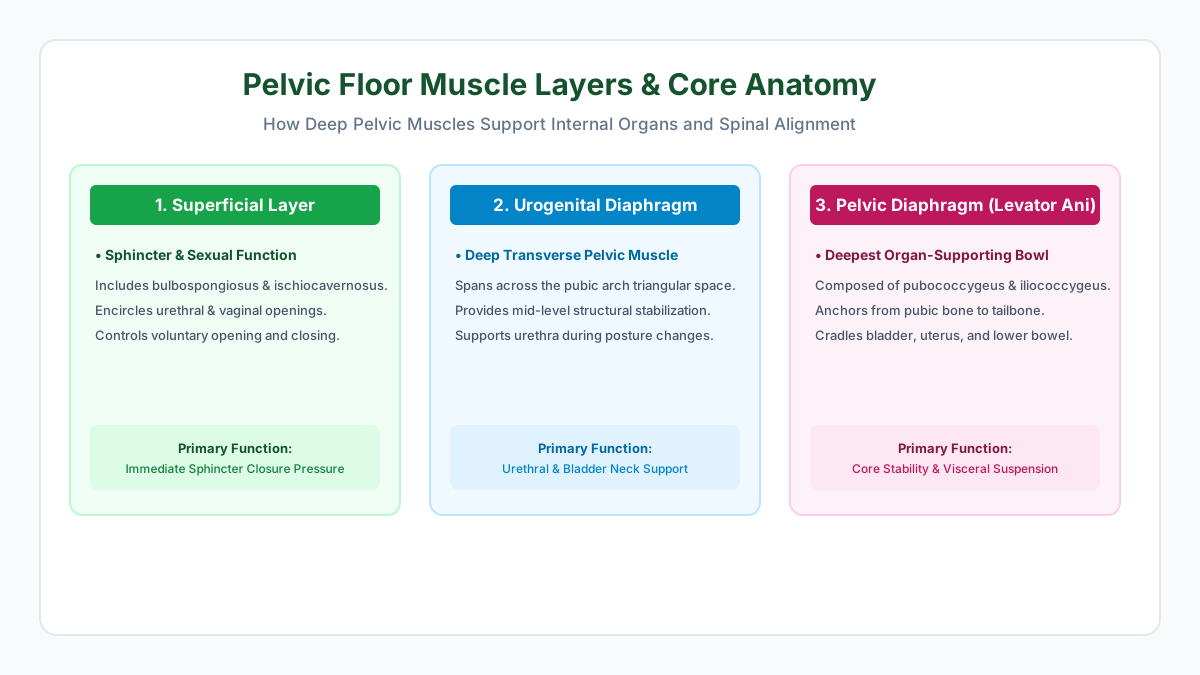
Figure 1: Pelvic Floor Muscle Layers & Deep Core Anatomy
1. Superficial Layer (Sphincter Control)
Located closest to the skin surface, these muscles encircle the urethral, vaginal, and anal openings. They provide immediate voluntary contraction to stop urine flow or hold gas.
2. Urogenital Diaphragm (Mid-Layer Stability)
Spanning across the pubic arch, this triangular layer provides mid-level structural stabilization for the urethra during movement and sudden changes in intra-abdominal pressure.
3. Pelvic Diaphragm / Levator Ani (Deep Organ Support)
The deepest, largest muscle group (primarily the pubococcygeus and iliococcygeus), forming the primary supportive bowl that cradles your bladder, uterus, and lower intestine.
How Pelvic Floor Health Changes After 40
Pelvic floor health does not exist in isolation—it is directly interconnected with midlife hormonal transitions and general physical aging. As introduced in our overview of Women’s Health After 40, the 40s and 50s bring distinct physiological shifts that directly impact pelvic tissue support:
- Hormonal Shifts: Estrogen receptors line the pelvic floor connective tissues and urethra. As estrogen levels fluctuate during perimenopause, collagen synthesis decreases, leading to thinner, less elastic tissues.
- Muscle Mass Adaptations: Like sarcopenia in the glutes or legs, pelvic muscle fibers naturally lose volume over time if not regularly engaged.
- Pregnancy & Childbirth History: Prior pregnancies or labor exert long-term stretch on pelvic nerve pathways and fascia that can become more noticeable as estrogen drops in midlife.
- Lifestyle Factors: Prolonged sitting, high-impact exercise without core support, or chronic constipation create ongoing pressure spikes that influence pelvic tone.
Why Pelvic Floor Muscles Lose Tone After 40
Pelvic floor muscle tone naturally evolves due to several physiological factors:
- Declining Estrogen Levels: Estrogen helps maintain muscle protein synthesis, tissue elasticity, and vascular blood flow in the pelvis. Lower estrogen during perimenopause can lessen connective tissue resiliency.
- Accumulated Physical Strain: Pregnancy, vaginal or caesarean delivery, chronic coughing, or years of heavy lifting stretch pelvic ligaments.
- Sarcopenia (Age-Related Muscle Decline): Like the glutes or biceps, pelvic floor muscle fibers naturally lose volume over time if not regularly engaged.
- Chronic Intra-Abdominal Pressure: Chronic constipation, heavy straining, or high-impact exercise can push pelvic organs downward over time.
How to Do Kegels Correctly: Form Check & Common Mistakes
Performing pelvic floor contractions (Kegels) effectively requires isolating the deep pelvic muscles without engaging surrounding muscle groups. Doing Kegels incorrectly can lead to fatigue or unnecessary abdominal pressure.
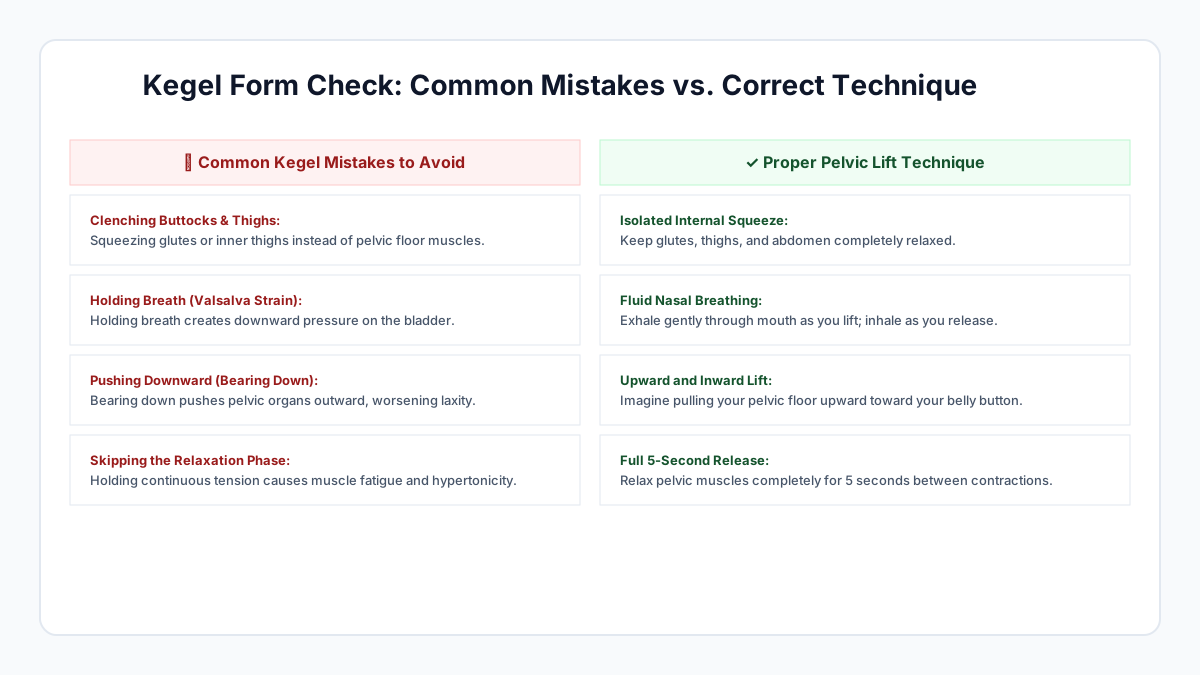
Figure 2: Form Check: Common Kegel Mistakes vs. Correct Technique
💡 The Golden Rule of Proper Kegel Technique
Squeeze and Lift Upward: Imagine trying to gently pull your pelvic floor muscles upward toward your belly button. Exhale through your mouth as you lift, hold for 3 to 5 seconds, and release completely for 5 full seconds. Keep your thighs, buttocks, and upper abdomen completely relaxed.
The 4-Step Pelvic & Deep Core Exercise Sequence
For optimal results, pelvic floor exercises should be paired with deep core stabilization movements that engage the transversus abdominis and diaphragm:
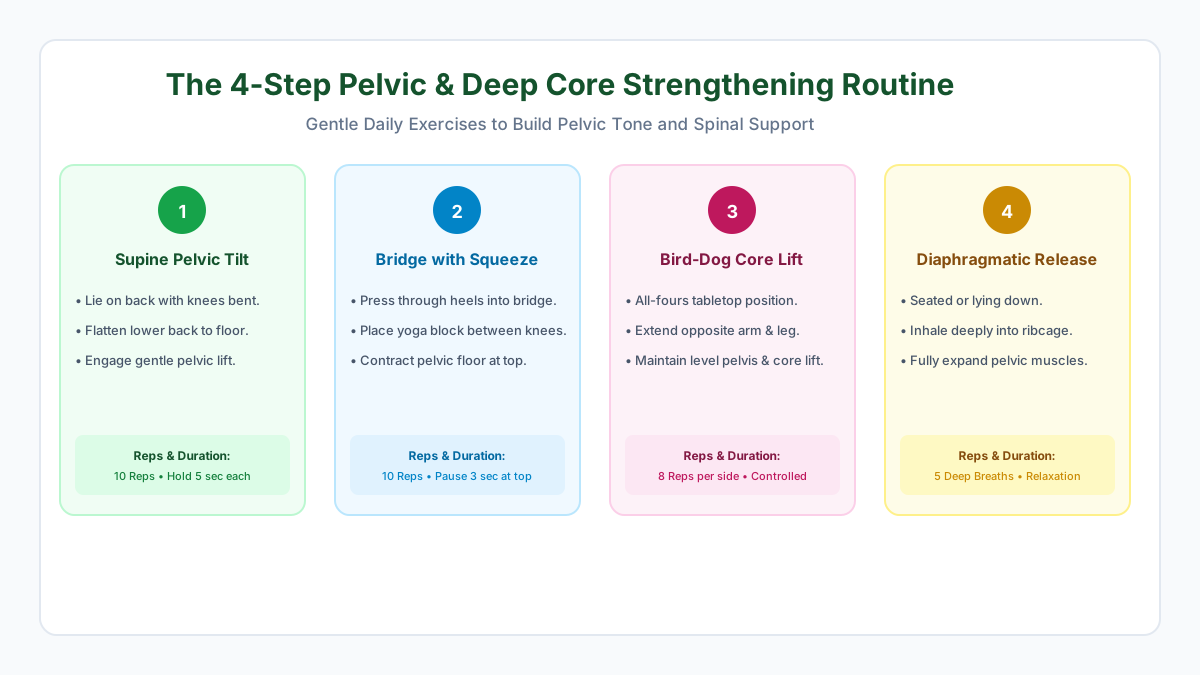
Figure 3: The 4-Step Pelvic & Deep Core Strengthening Routine
- Supine Pelvic Tilt: Lie on your back with knees bent. Gently tilt your pelvis to flatten your lower back against the floor while drawing your pelvic floor upward. Hold 5 seconds; repeat 10 times.
- Bridge with Thigh Squeeze: Press through your heels to raise your hips into a bridge while gently squeezing a pillow between your knees. Contract pelvic muscles at the top; repeat 10 times.
- Bird-Dog Core Stabilization: On all fours, extend opposite arm and leg while keeping your pelvis perfectly level and core engaged. Repeat 8 controlled reps per side.
- Diaphragmatic Breathing & Release: Sit comfortably and inhale deeply through your nose, expanding your ribcage and relaxing your pelvic floor completely. Take 5 slow deep breaths.
When Kegels May Not Be the Right Starting Point
While strengthening exercises benefit many women, Kegels are not a universal solution for every pelvic issue. In cases where pelvic floor muscles are chronically tight, spasmed, or hypertonic, performing repetitive squeezes can actually increase discomfort.
⚠️ Indicators That You Need Pelvic Muscle Relaxation First
If you experience any of the following, focus on deep diaphragmatic breathing and gentle pelvic release stretches rather than intense Kegels:
- Pain or tightness during pelvic exams or sexual intimacy
- Persistent pelvic aching or tailbone discomfort after prolonged sitting
- Difficulty starting your urinary stream or feeling like you cannot fully empty your bladder
- Unintentional muscle clenching during daily stress
Pelvic Floor Myths Women Should Stop Believing
💡 3 Common Pelvic Floor Myths Debunked
Myth 1: “Pelvic floor issues only happen after childbirth.”
Reality: Women who have never given birth can also experience pelvic floor weakness or tightness due to age-related estrogen decline, sarcopenia, chronic stress, or high-impact strain.
Myth 2: “More Kegels are always better.”
Reality: Doing hundreds of rapid Kegels daily leads to muscle fatigue, improper form, and potential pelvic tightness. Quality form and full 5-second relaxation phases matter far more than repetition count.
Myth 3: “If you have no obvious symptoms, no pelvic floor care is needed.”
Reality: Proactive deep core and pelvic awareness helps preserve organ support and joint stability long before noticeable symptoms appear.
Weak vs. Overactive Pelvic Muscles (Hypotonic vs. Hypertonic)
Not all pelvic floor issues stem from weakness. It is vital to understand whether your muscles are underactive or overly tight:
- Underactive (Hypotonic) Pelvic Floor: Muscles are overly relaxed or stretched, leading to stress leakage during coughing, sneezing, or jumping. Response: Strengthening Kegels and core stabilization.
- Overactive (Hypertonic) Pelvic Floor: Muscles are held in a chronic state of tension or spasm, leading to pelvic pain, frequency, or difficulty emptying the bladder. Response: Deep breathing, pelvic relaxation stretches, and physical therapy evaluation.
Daily Habits for Pelvic & Bladder Support
Incorporate these simple non-medical habits into your daily routine:
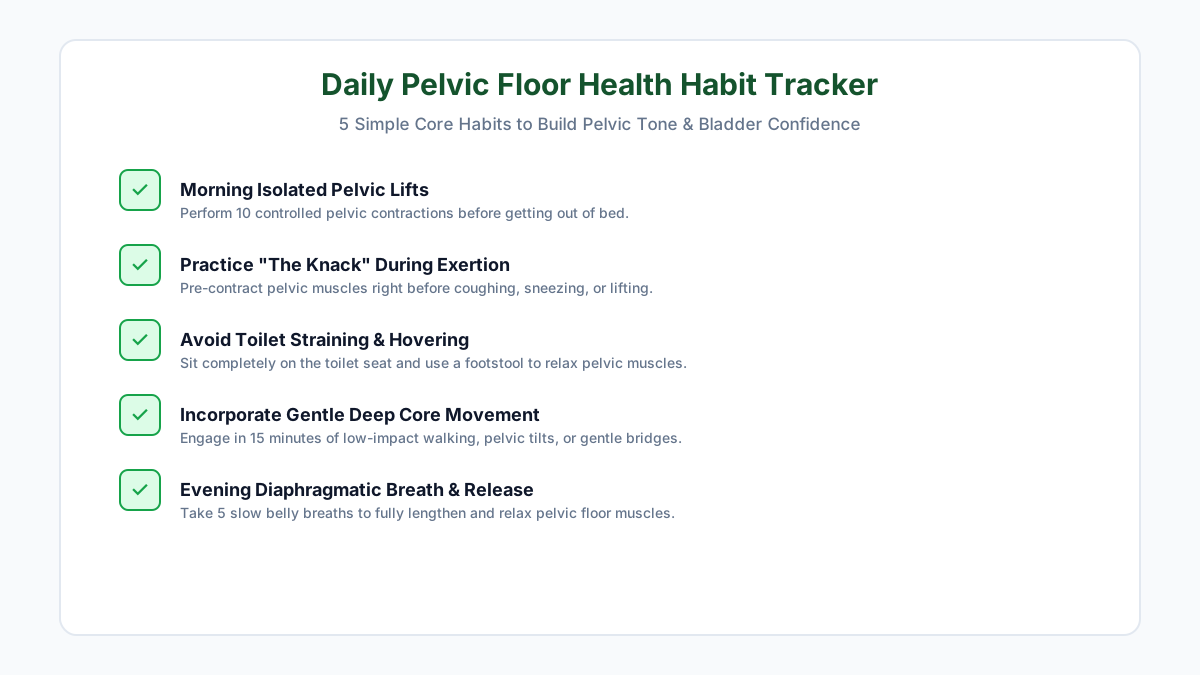
Figure 4: Daily Pelvic Floor Health Habit Tracker
- Practice “The Knack”: Pre-contract your pelvic floor muscles a split second before coughing, sneezing, or lifting heavy objects to protect against sudden pressure spikes.
- Avoid Toilet Hovering: Sit completely on the toilet seat. Hovering keeps pelvic floor muscles partially contracted, preventing complete bladder emptying.
- Use a Footstool (Toilet Posture): Elevating your knees slightly above your hips using a small footstool relaxes the puborectalis muscle, allowing strain-free bowel movements.
- Hydrate Rationally: Sip 64–80 oz of plain water daily to prevent acidic, concentrated urine from irritating the bladder lining. For ingredient support options, review our guide on Natural Bladder Support for Women.
Pelvic Floor Health: A Simple Daily Routine Checklist
📋 Daily Pelvic & Core Habit Checklist
- ☐ Morning Isolated Kegels: 10 lifts held for 3–5 seconds with a 5-second release.
- ☐ Use “The Knack”: Pre-contract pelvic floor before coughing or lifting.
- ☐ Posture Check: Sit fully on toilet seat with feet elevated on a footstool.
- ☐ 15-Minute Core Movement: Include pelvic tilts or low-impact walking, as covered in our Low-Impact Cardio Guide.
- ☐ Evening Pelvic Release: Take 5 deep diaphragmatic breaths to fully lengthen pelvic muscles.
Frequently Asked Questions About Pelvic Floor Health
What are pelvic floor exercises?
Pelvic floor exercises (often called Kegels) involve targeted, voluntary contractions of the deep muscles cradling your pelvic organs. When performed correctly, they help strengthen muscle tone, improve urethral closure pressure, and support core stability.
How do women know if they are doing Kegels correctly?
You should feel an internal squeeze and upward lift around your vagina and anus without contracting your glutes or inner thighs, and without holding your breath. Placing a hand on your stomach ensures your outer abdominal muscles remain relaxed.
How often should women do pelvic floor exercises?
Pelvic floor exercise routines vary depending on individual needs and muscle condition. Many exercise programs focus on controlled contractions with proper relaxation between repetitions. Consistency and correct technique are generally more important than doing a high number of repetitions.
Can pelvic floor exercises help bladder support?
Yes. Strengthening the pelvic floor muscles helps reinforce support underneath the bladder neck and urethra, which may reduce stress leakage during coughing, laughing, or physical activity.
Can pelvic floor muscles become too tight?
Yes. Pelvic muscles can become hypertonic (chronically spasmed or tight), which can cause pelvic aching or difficulty emptying the bladder. In these cases, deep breathing and pelvic relaxation stretches are recommended over strengthening Kegels.
📚 Related Women’s Health, Mobility & Nutrition Reading:
- Women’s Health After 40: Complete Guide to Hormones, Strength & Healthy Aging – Pillar 1 Guide.
- Bladder Health After 40: Causes, Changes & Practical Support Options – Pillar 2 Guide.
- Women’s Health Authority Hub – Complete category cluster.
- Mobility Exercises to Stay Flexible as You Age – Senior mobility and core balance.
- Low-Impact Cardio Workouts for Adults Over 50 – Knee-safe 20-minute exercise routine.
- Anti-Inflammatory Diet for Beginners – Whole food nutrition swaps.
🩺 Medical Disclaimer
The wellness information, guides, and suggestions provided in this article are for educational and motivational purposes only. This content is not a substitute for professional medical advice, diagnosis, treatment, or therapy. Always consult with a qualified healthcare professional or physician before starting any new diet, fitness program, or wellness plan.
Scientific References & Authoritative Sources
The following credible women’s health organizations provide evidence-informed clinical guidelines regarding pelvic floor health:
- American College of Obstetricians and Gynecologists (ACOG): Clinical Guidance for Pelvic Floor Dysfunction & Muscle Rehabilitation. Available at: acog.org
- The North American Menopause Society (NAMS): Midlife Muscle Density & Pelvic Floor Health. Available at: menopause.org
- Harvard Health Publishing (Harvard Medical School): Pelvic Floor Exercise Anatomy & Technique. Available at: health.harvard.edu