Sleep Calculator
Estimate bedtime, wake-up time, and sleep duration using simplified sleep-cycle calculations. Results are educational estimates and may help you plan a more consistent sleep schedule.
Recommended Bedtimes
Want Better Sleep?
Improve your sleep naturally with our evidence-based guides.
Read Our Sleep Improvement Guide →What is a Sleep Cycle?

Sleep is not a uniform state of rest. Instead, when you sleep, your brain and body progress through a series of distinct stages that form a Sleep Cycle. A typical Sleep Cycle comprises two main categories of sleep: Non-Rapid Eye Movement (NREM) sleep and Rapid Eye Movement (REM) sleep.
Each Sleep Cycle transitions through the following stages:
- NREM Stage 1 (Light Sleep): The transition phase from wakefulness to sleep, lasting only a few minutes. Heart rate and breathing slow down, and muscles begin to relax.
- NREM Stage 2 (Light Sleep): A deeper state of relaxation where body temperature drops and brain wave activity slows, punctuated by brief bursts of activity (sleep spindles). This stage makes up the largest percentage of nightly sleep.
- NREM Stage 3 (Deep Sleep): Also known as slow-wave sleep. This is the most restorative phase of sleep, critical for physical recovery, tissue repair, muscle growth, and immune system function. Waking during deeper sleep may contribute to temporary grogginess for some people.
- REM Sleep (Dream Sleep): Characterized by rapid eye movements, increased brain activity, and temporary muscle paralysis. REM sleep is essential for cognitive processes, memory consolidation, learning, and emotional regulation.
Why 90-Minute Sleep Cycles Matter
On average, it takes approximately 90 minutes to complete all stages of one Sleep Cycle. While Sleep Cycles commonly vary in length—ranging anywhere from 70 to 120 minutes depending on the individual and the time of night—90 minutes is widely used as a simplified planning estimate for sleep schedules.
Some people may feel less groggy when waking from lighter sleep, but actual sleep stages and cycle lengths vary throughout the night. Conversely, if your alarm goes off in the middle of deep sleep (Stage 3), you will likely experience sleep inertia—a state of grogginess, disorientation, and cognitive impairment that can persist for minutes or even hours after waking.
How Much Sleep Do Adults Need?
Sleep requirements change throughout life. According to public health guidelines from the Centers for Disease Control and Prevention (CDC) and the American Academy of Sleep Medicine (AASM), the recommended nightly sleep durations by age group are:
- Infants (4–12 months): 12 to 16 hours per day (including naps)
- Toddlers (1–2 years): 11 to 14 hours per day (including naps)
- Preschoolers (3–5 years): 10 to 13 hours per day (including naps)
- School-Age Children (6–12 years): 9 to 12 hours per night
- Teenagers (13–18 years): 8 to 10 hours per night
- Adults (18–64 years): 7 to 9 hours per night (corresponding to 5 or 6 Sleep Cycles)
- Older Adults (65+ years): 7 to 8 hours per night
While these are general recommendations, individual sleep needs can vary based on genetics, activity levels, pregnancy, and overall health status.
Benefits of Consistent Sleep Schedules
Maintaining a consistent sleep schedule—going to Bedtime and waking up at the same Wake-Up Time every day, including weekends—is one of the most effective ways to synchronize your body’s internal biological clock, or circadian rhythm. An aligned circadian rhythm supports:
- Easier sleep onset and smoother transitions into deep sleep.
- More consistent energy levels, alertness, and focus throughout the day.
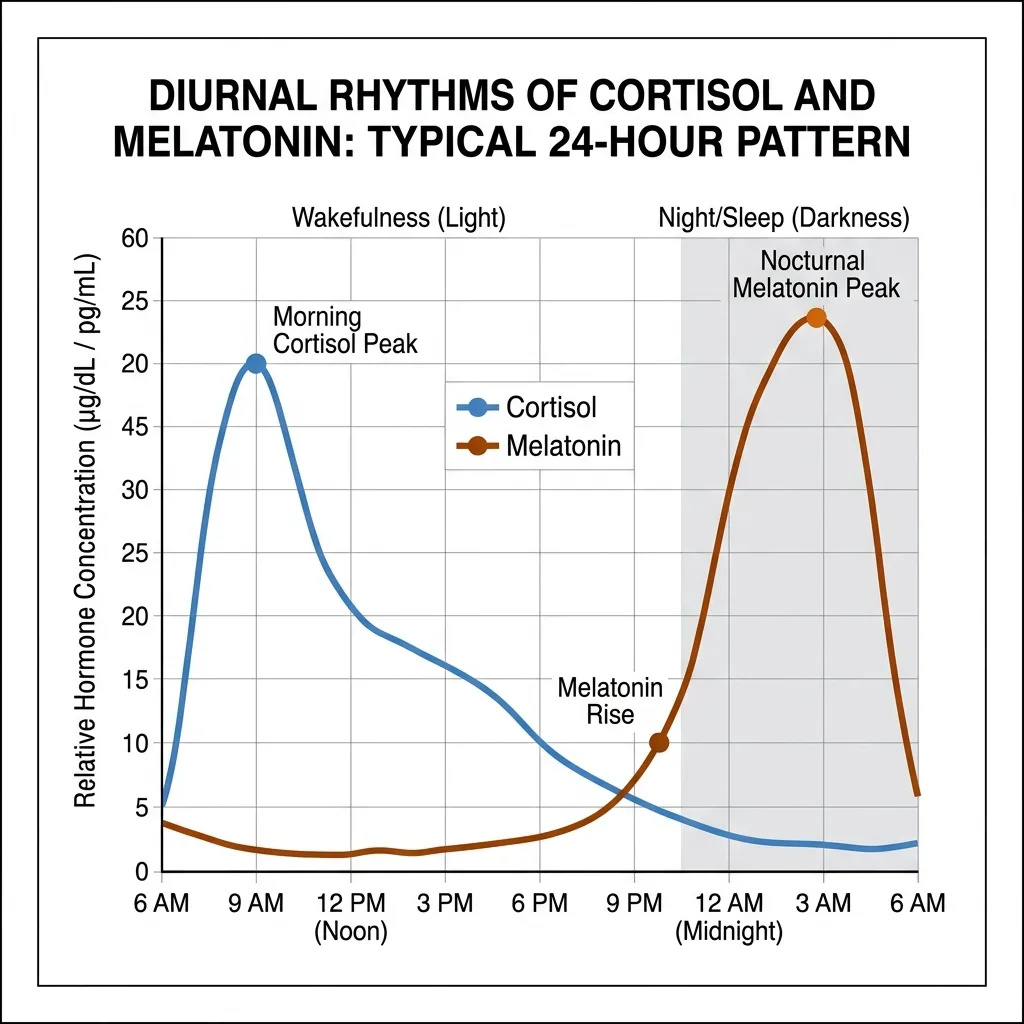
- Optimal hormonal regulation, including healthy cortisol and melatonin release cycles.
- Improved mood, cognitive resilience, and overall cardiovascular health.
Tips for Better Sleep Hygiene
Sleep hygiene refers to the habits and environmental factors that influence sleep quality. To optimize your sleep environment and behavior, consider these evidence-based practices:
- Manage Light Exposure: Evening light exposure, particularly from bright or blue-enriched light, may delay melatonin release and make it harder for some people to fall asleep. Turn off electronic screens at least 60 minutes before Bedtime.
- Create a Cool, Dark Environment: Keep your bedroom quiet, completely dark, and set to a comfortably cool bedroom; the ideal temperature varies between individuals.
- Avoid Late Stimulants: Consider limiting caffeine later in the day, especially if it interferes with your sleep. Individual sensitivity and caffeine clearance vary. Alcohol should also be limited as it disrupts sleep architecture and suppresses REM sleep.
- Establish a Wind-Down Routine: Engage in calming activities before Bedtime, such as reading a physical book, gentle stretching, or listening to relaxing music, to signal to your nervous system that it is time to rest.
Related Sleep Resources
Read our evidence-based guides to learn more about improving your sleep habits:
Frequently Asked Questions
Medical Disclaimer: This Sleep Calculator provides general educational estimates and is not a medical device or a substitute for professional medical advice, diagnosis, or treatment. Sleep Cycles and sleep needs vary between individuals.

Scientific References and Sources
- Centers for Disease Control and Prevention (CDC). “How Much Sleep Do I Need?” CDC Healthy Living Guidelines. CDC Sleep Guidelines.
- National Heart, Lung, and Blood Institute (NHLBI). “How Sleep Works.” NIH Health Information Guides. NHLBI Sleep Research Portal.
- American Academy of Sleep Medicine (AASM). “Joint Consensus Statement of the AASM and Sleep Research Society.” Journal of Clinical Sleep Medicine. AASM Sleep Recommendations Study.
📢 Embed This Free Sleep Calculator on Your Website
You are welcome to embed this interactive health tool on your blog or website for free. Copy and paste the HTML snippet below into your page editor:
Attribution link to HealthWellness4US is appreciated when embedding our interactive calculators.